Postpartum Syndrome Where Mother Doesn't Connect With Baby
Thepostpartum depression is very common among women who have only get a mother syndrome, however not all symptoms experienced after childbirth point that information technology is suffering a depression.
In this commodity nosotros will review its characteristics, symptoms, causes and most constructive treatments.
Characteristics of postpartum depression
Information technology is a disorder that is part of depressive disorders, which are quite frequent in the general population (especially in women), and tin can occur at whatsoever time of life.
Postpartum Depression
Also, as the proper name suggests, is a depressive disorder that can be moderate or astringent, which occurs in women after giving birth.
Still, the presentation of this depressive picture (or low), does not have to occur immediately after delivery, but it can occur from a few days after delivery, until a twelvemonth subsequently giving birth. Most times it usually appears nearly 3 months after the nativity of the child.
And so if the symptoms announced after a few weeks of giving nascency, it could be postpartum depression.
It should exist noted that this disorder causes suffering and discomfort both in the person who suffers it and in the family unit, and affects the health of the newborn.
Thus, it is clear that PD is a astringent depressive disorder that has the peculiarity of developing in women during the days or weeks after the birth of their child.
Let's continue time to see what are the typical symptoms of this disorder to accept a little clearer what are their characteristics .
What symptoms are part of postpartum depression?
Like all depressive symptoms, PD is characterized by a large number of symptoms.
You probably already know which are the well-nigh characteristic symptoms of depression every bit feelings of sadness, crying or lack of involvement in things.
Nevertheless, beyond the near popularly known, in the PD can present a broad diverseness of symptoms, which may be of equal or even greater importance.
These symptoms are the following:
i. Sadness : information technology is the well-nigh frequent symptom. The woman with PD has a depressed mood and often feels miserable, unhappy and wanting to cry permanently.
2. Changes in appetite: eastward south quite common appetite and nutrient intake change significantly, either increasing or decreasing. This symptom is commonly reflected in the weight of the patient, which increases or decreases significantly.
three. Irritability and agitation: e fifty depressive symptoms often cause more than irritable and agitated state of the woman in front of her husband, family, even newborn son.
4. Feelings of worthlessness or guilt: l you deplorable feelings are frequently accompanied by these feelings. The adult female usually feels useless and guilty for suffering from depression and not being able to take good care of her newborn child.
five. Lack of pleasure: c omo all depressive, this practically ubiquitous in all DP symptom. The patient with depression will exist very difficult to have involvement or experience pleasure with anything.
vi. Indisposition : e very mutual s that the DP is accompanied by great difficulty falling asleep, and lead times and rest periods contradistinct.
7. Loss of energy and fatigue: l to low causes a much higher than usual tiredness, with a noticeable loss of energy and difficulty performing any task, falling well into inactivity (asthenia has similar symptoms).
8. Anxiety : u na woman with DP usually provides states anxiety manifested by a feeling of fearfulness of non beingness able to care for their newborn, non loving him enough or existence unable to be alone with him.
9. Disconnection: l to postpartum depression frequently results in the sufferer some difficulty paying attending to the most relevant aspects of your life, and shows off its context and focused on their concerns.
10. Loss of concentration: similarly, postpartum depression usually causes a marked loss of ability to concentrate on anything.
xi. Thoughts of death or suicide: postpartum depression is a serious disorder, and therefore it should not be surprising that at some point in the episode ideas of death or suicide may appear .
12. Problems to perform domestic or labor tasks: postpartum depression is usually very disabling, and then except for the milder cases, it is usual to incapacitate the person who suffers information technology to continue working life, and in many cases to perform homework.
xiii. Inability to treat the baby or herself: although information technology may seem strange that a mother is unable to care for her newborn baby, it should be noted that PD is a serious depressive disorder , and equally such can incapacitate the mother for Take accuse of your child and fifty-fifty of yourself.
14. Negative feelings towards the baby: the origin that identifies the mother as the cause of her depressive state is the birth of her child, then negative feelings towards the baby (although they cause discomfort to the mother) are commonly present during the episode. Even in the nearly serious cases, you may think almost harming your infant. No howevers these thoughts rarely materialize.
15. Puerperal psychosis: although not many, some farthermost episodes of postpartum depression can be accompanied by psychosis. This psychosis is characterized by a loss of contact with reality, strange ideas, confusion, agitation and lack of sleep.
These xv symptoms are characteristic of postpartum depression, just this does not mean that if you suffer whatsoever of them yous have to have it, or that to suffer information technology you have to nowadays them all.
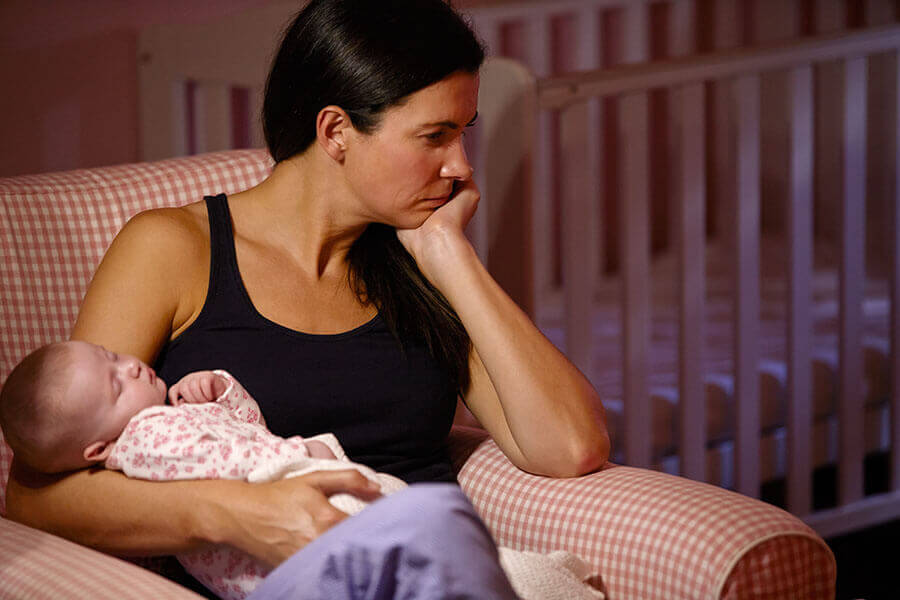
Let's meet where the diagnosis of postpartum depression is heading.
What is your diagnosis?
Postpartum low is defined every bit the evolution of a major depressive episode during the first 4-vi weeks after delivery, although in practice this episode may occur up to about one year later on giving nativity.
The clinical moving picture commonly presented by women who endure from it is the same equally that which characterizes major depression, that is, PD does not differ qualitatively from other depressive episodes that occur in contexts other than postpartum.
Therefore, in order to diagnose a PD, most of the following aspects must be presented during the weeks or months post-obit the delivery:
-
The mood should exist depressed almost of the twenty-four hours, almost every day while the depressive episode occurs.
-
There must be a significant decrease in interest and / or pleasure in practically all activities.
-
There must exist a loss or a significant increase in weight without conveying out whatever type of diet or program aimed at weight loss.
-
The lack or excess of slumber should occur frequently.
-
Fatigue, feelings of worthlessness, decreased power to think, agitation or recurrent ideas of death, should appear on a regular basis.
Although roughly these are the defining points of PD, this diagnosis must be scrupulously performed past a psychiatrist or clinical psychologist, through a detailed exploration of the signs and symptoms in the context of a clinical interview.
How can I know if I have postpartum depression?
Although the diagnosis of a depressive disorder such as PD must be made by a clinical professional person, during pregnancy and childbirth, multiple changes occur in the torso (hormonal, physical, psychological, etc.) naturally.
It enters into the expected, that this series of changes tin produce diverse emotional variations, advent of new feelings or presentation of unusual thoughts; and these small alterations do non necessarily accept to be interpreted equally the beginning of a low.
Given this situation, it would be convenient to analyze the changes you lot detect after delivery, and go to a medical professional when:
-
Your depressed mood and feelings of sadness do not disappear or diminish after almost ii weeks of delivery.
-
Notes that some of the symptoms described above become more than intense.
-
It is becoming increasingly difficult for you to perform domestic tasks, take care of your child or carry out bones self-care or self-care activities.
-
You have thoughts of hurting yourself or your babe.
If I suffer postpartum depression am I a weirdo?
Admitting a PD after giving birth to your kid is frequently a hard and expensive task for all that it implies.
Yet, this disorder is quite mutual amidst women who take just become mothers in our population.
It is estimated that this disorder affects 13% of women later childbirth, and can affect upward to xxx% in teenage mothers.
Causes of postpartum depression
At present, the causes that make up the appearance of PD are non known exactly.
However, many different factors have been detected that tin affect the mood of the woman after giving birth. These are the post-obit:
Psychosocial factors
There are a series of psychosocial components that can deed as risk factors in PD. Having feet, depression or stressful events during pregnancy tin increase the take a chance of PD subsequently the babe is built-in.
Likewise, having niggling social support during pregnancy or pre-pregnancy stages, or having had depressive episodes before pregnancy and childbirth tin besides increment the run a risk of PD.
Biological factors
The regulation of certain hormones maintains a close link with PD disorder. Low levels of estrogen (which already decrease with pregnancy) and progesterone, increase the possibility of developing PD.
As well, women with PD have high levels of glucocorticoids, and depression levels of tryptophan and folic acid during pregnancy.
Childbirth
Possessing very loftier expectations nearly childbirth can cause when the moment of giving nascence comes, that perspective is disappointed, and creates frustration in the mother.
Many cases of women with PD accept experienced a nascency with complications or traumatic, premature births of their children or health problems in the newborn.
Preconceived ideas of maternity
Often, motherhood is conceived as a fourth dimension in which a woman must be radiant, vital and capable of performing all tasks perfectly.
Women who maintain this perception of maternity and who once are a mother have difficulties when performing all the tasks presented to them, may be more exposed to starting a postpartum depression film.
How tin can it be treated?
The intervention of first pick for major depressive episodes is pharmacological treatment, usually administration of antidepressants.
However, despite the fact that antidepressants have more than shown efficacy in reversing depressive episodes, in postpartum depression the use of drugs must exist monitored very closely, due to the possibility of affecting the baby through breastfeeding.
Therefore, treatment with antidepressants in women with PD who are breastfeeding is ruled out, equally it could be very harmful for the newborn.
Besides Read: Broken Heart Syndrome: Symptoms, Causes, Treatments
Regarding psychotherapy, interventions such as cognitive behavioral treatment, support for couples or interpersonal psychotherapy have shown their effectiveness in PD, then it is recommended to complement pharmacological treatment with psychological therapy.
rodriquezshich2001.blogspot.com
Source: https://itspsychology.com/postpartum-depression/
0 Response to "Postpartum Syndrome Where Mother Doesn't Connect With Baby"
Post a Comment